
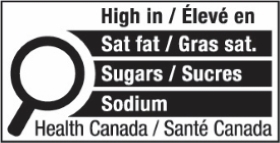
Magnifying Glass Symbol on Food Labels With The Words “High in Saturated Fats”, “High in Sugars”, or “High in Sodium”
Overview of New Regulations
Canada has introduced new rules for food labelling that appear right on the front of product packaging. These changes are designed to help shoppers make quicker, more informed decisions about the food they buy. The main goal is to highlight foods that are high in certain nutrients that people often consume too much of. This means you’ll start seeing new symbols on many food items. It’s a significant shift from how food has been labelled in the past, aiming for greater clarity and public health benefit.
Key Dates and Transition Periods
The regulations officially came into effect on July 20, 2022. However, there’s a transition period allowing businesses time to adjust their packaging. This period is quite generous, giving producers until January 1, 2026, to fully comply with all the new requirements. This allows for a phased approach, meaning you don’t have to change everything overnight. It’s wise to plan your packaging updates well before this final deadline to avoid any last-minute issues.
Governing Bodies and Responsibilities
Two main government bodies are involved in overseeing these new front-of-package labelling rules. Health Canada is responsible for setting the regulations and providing guidance on how they should be interpreted. The Canadian Food Inspection Agency (CFIA) is tasked with enforcing these rules. Both organizations play a part in making sure that food producers in Canada are meeting the new standards and that consumers have access to clear, consistent nutritional information on their food purchases.
Mandatory Front Of Packaging Nutrition Symbols
Foods Requiring the Nutrition Symbol
New regulations in Canada now require a specific front-of-package nutrition labelling symbol on prepackaged foods. This symbol is mandatory for products that meet or exceed certain thresholds for saturated fat, sugars, or sodium. The aim is to provide consumers with a quick way to identify foods that are high in these nutrients, which can contribute to various health issues if consumed frequently. This initiative is a significant step towards promoting healthier eating habits across the country.
Exemptions from Mandatory Symbol Display
While the front-of-package nutrition labelling is broadly applicable, certain foods are exempt. These exemptions are typically for technical reasons or because the food is not intended for general consumption in the same way as typical retail products. Examples include:
- Individually portioned items served with meals in restaurants (e.g., crackers with soup, creamers with coffee).
- Milk and cream sold in refillable glass containers.
- Foods that are exempt for technical reasons as outlined in the regulations.
It’s important for producers to carefully review the exemption criteria to determine if their product qualifies. Understanding these exemptions is key to compliance with the new rules.
The introduction of these symbols is intended to simplify food choices at the point of purchase, helping consumers make more informed decisions about the nutritional content of the foods they buy for themselves and their families.
Presentation and Design of Front-of-Packaging Symbols
Symbol Size and Proportionality
The size of the nutrition symbol is not arbitrary; it’s directly linked to the size of the product’s principal display surface (PDS). This ensures that the symbol is visible and legible across a wide range of package dimensions. For packages with a PDS greater than 30 cm², the symbol will generally feature three bars, representing the nutrients of concern. However, the specific format and number of bars can vary based on the nutrient thresholds met. Smaller packages, with a PDS of 30 cm² or less, may display symbols with fewer than three bars, showing only those nutrients that trigger the “High in” declaration. The goal is always to make the symbol easily identifiable, regardless of the package size.
Buffer Zones and Symbol Placement
Placement of the nutrition symbol is also regulated to maximize visibility. Generally, it should appear in the upper half of the principal display panel. If the principal display panel is wider than it is tall, the symbol should be located on the right half. It’s important that the symbol is oriented in the same manner as most other information on the panel. However, if other information is not parallel to the base of the package, the symbol’s text must be parallel to the base. This consistency helps consumers quickly locate and understand the information. A clear space, or buffer zone, around the symbol is also required to prevent it from being cluttered by other text or graphics.
Compendium of Nutrition Symbol Formats
Health Canada provides a compendium that outlines the specific formats for the nutrition symbols. These formats dictate the exact appearance, including colours, fonts, and the arrangement of text and graphic elements. The symbols are designed to be bilingual, appearing in both English and French, either as two separate symbols or integrated into one. There are specific requirements for both horizontal and vertical orientations. The horizontal format is the default, but the vertical format may be required for certain package dimensions where the horizontal symbol would be too wide for the principal display panel. Adherence to these specified formats is mandatory to maintain consistency and consumer recognition across all regulated products.
- Symbol must be easily identifiable.
- Placement is typically in the upper half of the principal display panel.
- Orientation should align with other package information, with text parallel to the base if necessary.
- A bilingual presentation (English and French) is required.
The design and placement of the nutrition symbol are carefully considered to ensure it is not overlooked. Regulations specify not only what information must be displayed but also precisely how it must be presented to aid consumer comprehension.
Under Canada’s Front-of-Package (FOP) nutrition labelling regime, a prepackaged food must display a “High in Sugar” symbol when its sugar content meets or exceeds the applicable regulatory threshold. For most prepackaged foods, the threshold is 15% of the Daily Value (DV) for sugars. A lower threshold of 10% DV applies to foods with a reference amount of 30 g or 30 mL or less, while large main dishes are subject to a higher threshold of 30% DV. These thresholds are designed to help consumers quickly identify products that make a significant contribution to daily sugar intake.
High in Sat. Fat
A product may be required to display a “High in Saturated Fat” symbol where its saturated fat content reaches or exceeds the applicable threshold. For most prepackaged foods, the threshold is 15% DV, which corresponds to approximately 3 g of saturated fat per serving/reference amount for foods intended for the general population. Foods with a reference amount of 30 g or 30 mL or less are subject to a 10% DV threshold, while qualifying main dishes are assessed against a 30% DV threshold. Notably, the FOP calculation is based on saturated fat only, even though the Daily Value used for the calculation is the DV established for saturated and trans fats combined.
High in Sodium
A “High in Sodium” symbol is required when a food’s sodium content meets or exceeds the applicable threshold under the FOP regulations. For most prepackaged foods, this threshold is 15% DV, equivalent to approximately 350 mg of sodium. Foods with a reference amount of 30 g or 30 mL or less are subject to a 10% DV threshold, while large main dishes must meet the higher 30% DV threshold before the symbol is required. These rules are intended to provide consumers with a clear and prominent indication of foods that contribute significantly to daily sodium intake.
Prohibited Foods for Front-of-Packaging Symbols
While the new front-of-package (FOP) nutrition labelling aims to guide consumers towards healthier choices, certain food categories are specifically excluded from displaying these mandatory symbols. This is not an oversight, but rather a deliberate regulatory decision based on the unique nature or intended use of these products. Understanding these prohibitions is key to ensuring compliance and avoiding misapplication of the FOP labelling rules.
Specific Product Categories Prohibited
Certain types of prepackaged foods are exempt from the requirement to display the FOP nutrition symbol. These exemptions are generally technical in nature or relate to the specific role the food plays in a diet. For instance, foods that are technically difficult to label, such as those sold in refillable glass containers like milk, are often excluded. Additionally, individually portioned items intended solely for commercial service alongside meals or snacks, like crackers served with soup or creamers for coffee, do not require the symbol. The intention here is to focus the mandatory labelling on foods consumers purchase and prepare for themselves, rather than those provided as part of a service.
Infant Foods and Nutritional Supplements
Products specifically formulated for infants and young children, as well as nutritional supplements, are not subject to the mandatory FOP nutrition symbol. This exclusion acknowledges that these products have distinct nutritional needs and are often consumed under specific guidance, such as from healthcare professionals. The regulatory framework recognises that applying general high-in-nutrient symbols to these specialized foods could be misleading or inappropriate given their targeted use and formulation. For example, infant formula is designed to meet specific developmental requirements, and applying a “high in sugar” symbol, even if technically accurate based on general thresholds, would not be helpful and could cause undue concern.
Formulated Diets and Meal Replacements
Similarly, formulated diets and meal replacements are also exempt from the mandatory FOP nutrition symbol requirement. These products are typically designed to provide a specific nutritional profile for weight management, medical reasons, or as a convenient substitute for a full meal. Their formulation is often carefully balanced to meet certain dietary standards, and the application of the standard FOP symbols could misrepresent their intended purpose. The regulations recognize that these products are often used under specific dietary plans, and their labelling requirements are addressed through other means to ensure consumers can make informed choices relevant to their specific dietary goals. It’s important for producers of these items to be aware of the new front-of-package nutrition symbol rules and their specific exemptions.
The exclusion of certain product categories from mandatory FOP nutrition labelling is a nuanced aspect of the regulations, designed to ensure the symbols are applied appropriately and do not create confusion for consumers regarding specialized dietary products.
Impact on Nutrient Content Claims
Updated Table of Permitted Claims
The introduction of mandatory front-of-package (FOP) nutrition symbols in Canada has brought about specific changes concerning nutrient content claims. While the Table of Permitted Nutrient Content Statements and Claims remains a reference, its application on the principal display panel (PDP) is now subject to restrictions when a food product also displays a mandatory nutrition symbol. This means that certain claims, particularly those related to saturated fat, sugars, and sodium, may no longer be permissible on the PDP if the product is also marked as “high in” those specific nutrients.
Restrictions on Claims with Mandatory Symbols
When a food product carries a “high in” nutrition symbol for saturated fat, sugars, or sodium, most related nutrient content claims are prohibited on the PDP. For instance:
- Saturated Fat: Claims like “low in saturated fat” or “reduced in saturated fat” might be restricted. However, “reduced in saturated fatty acids” is an exception and may still be permitted.
- Sugars: Claims such as “low in sugars” are generally prohibited if the “high in sugars” symbol is present. The “reduced in sugar” claim is an exception.
- Sodium: Similar to sugars, claims like “low in sodium” are typically disallowed when the “high in sodium” symbol is displayed. The “reduced in sodium or salt” claim is the exception here.
It is important to note that claims not directly related to saturated fat, sugars, or sodium, such as those for protein or fibre, are generally still allowed on the PDP alongside the FOP symbol. Additionally, representations that could be mistaken for the official FOP symbol are also prohibited.
Voluntary Health-Related Representations
Health-related representations, which encompass a broad range of statements and claims about a food’s nutritional properties and their impact on health, can still be made voluntarily on the PDP, even if the product displays a mandatory nutrition symbol. This includes:
- Quantitative declarations of nutrients (e.g., “360 mg of calcium per bar”).
- Nutrient function claims (e.g., “Protein helps build strong muscles”).
- Nutrient content claims (e.g., “Reduced in sugar”).
- Health claims (e.g., “A healthy diet rich in vegetables and fruit may help reduce the risk of heart disease.”).
- Third-party logos, seals of approval, or certification marks.
However, there are specific limitations. For example, an “unsweetened” claim is prohibited on the PDP if the product carries a “high in sugars” symbol. Similarly, a representation that a food is for use in a sodium-restricted diet is prohibited if the PDP displays a “high in sodium” symbol. These restrictions aim to prevent conflicting messages and ensure clarity for consumers regarding the product’s nutritional profile.
The interplay between mandatory FOP symbols and voluntary claims requires careful consideration. While the symbols highlight specific nutrient concerns, other claims can still be used to communicate positive nutritional attributes, provided they do not contradict the information conveyed by the symbols or mislead the consumer.
Enforcement and Compliance Measures
Role of the Canadian Food Inspection Agency
The Canadian Food Inspection Agency (CFIA) is the primary body responsible for making sure that food producers in Canada are following the new front-of-package (FOP) nutrition labelling rules. They’re the ones who will be out there checking labels on products to see if they meet the requirements. Think of them as the inspectors making sure everything is in order. They have the authority to take action if a product’s labelling isn’t quite right, especially if it’s misleading or just plain wrong. This includes making sure the nutrition symbols are present when they should be, and that they look the way they’re supposed to.
Health Canada’s Interpretive Guidance
Health Canada plays a supporting role, but it’s a really important one. They’re the ones who actually create the regulations in the first place. After the rules are published, they provide guidance to help everyone understand what’s expected. This can come in the form of documents, explanations, and sometimes even visual examples to show exactly how the FOP symbols should be displayed on different types of packaging. If you’re unsure about a specific aspect of the regulations, Health Canada’s guidance is usually the place to look for clarification. They help make the rules clearer for both businesses and consumers.
Consequences of Non-Compliance
So, what happens if a food producer doesn’t get it right? Well, there can be consequences. The CFIA can issue warnings, request that products be relabelled, or, in more serious cases, they can even order products to be removed from sale. It really depends on the severity of the issue and whether it’s a first-time mistake or a repeated problem. The main goal is to protect consumers by ensuring they have accurate information about the food they’re buying. It’s not just about a slap on the wrist; it’s about making sure the system works as intended. For businesses, it can mean unexpected costs and delays if they have to fix their packaging or pull products from shelves. It’s definitely something producers want to avoid by getting their labelling right from the start.
Seeking Expert Legal Assistance
Understanding Evolving Regulations
The landscape of food labelling in Canada, particularly concerning Front of Package (FOP) nutrition symbols, is not static. Regulations can and do change, sometimes with little notice. For instance, Health Canada recently issued an Interim Policy Statement on March 6, 2025, providing exemptions for certain products like prepackaged single-ingredient coconut and specific ready-to-eat breakfast cereals. These kinds of updates mean that what was true yesterday might not be true today. Staying on top of these shifts requires constant vigilance and a deep awareness of official government communications and potential amendments to the Food and Drug Regulations (FDR).
Ensuring Full Compliance
Achieving and maintaining full compliance with FOP labelling requirements is a complex task. It involves not only understanding the mandatory nutrition symbols, their thresholds, and placement rules but also being aware of exemptions and prohibited food categories. For example, infant foods, nutritional supplements, and formulated diets have specific rules that differ from general prepackaged foods. It is vital to consult the official regulations, including Schedule K.1 and the Compendium of Nutrition Symbol Formats, to grasp the precise requirements.
Here are some key areas where legal guidance is particularly beneficial:
- Interpretation of Thresholds: Understanding the exact nutrient thresholds that trigger the mandatory nutrition symbol can be nuanced, especially for products with complex ingredient lists or varying nutrient profiles.
- Exemption Criteria: Identifying whether a product qualifies for an exemption requires careful review of the FDR and any subsequent policy statements.
- Symbol Placement and Design: Adhering to strict guidelines on symbol size, proportionality, and buffer zones is critical to avoid non-compliance.
Guidance on Packaging and Marketing Updates
Beyond the FOP symbols themselves, legal counsel can assist in reviewing your overall packaging and marketing strategies to ensure they align with the new labelling regime. This includes:
- Nutrient Content Claims: Ensuring that any nutrient content claims made on the packaging are permitted and do not contradict the information presented by the FOP symbols.
- Advertising Materials: Verifying that all advertising, whether online, in print, or broadcast, accurately reflects the product’s labelling and does not make misleading statements. It’s a good idea to go through all your current and planned advertising. This includes things like social media posts, print ads, website content, video ads and even promotional flyers.
- Voluntary Symbol Use: If you choose to voluntarily display FOP symbols on products that are otherwise exempt, legal advice can help ensure this is done correctly and does not inadvertently create new compliance obligations.
Navigating the intricacies of Canadian food labelling laws requires careful attention to detail. Expert legal advice can prevent costly errors and ensure your products meet all regulatory standards, allowing you to focus on your business operations with confidence.
Frequently Asked Questions
When did these new front-of-package labelling rules start, and when must all food businesses fully comply?
The new rules for front-of-package nutrition labelling officially began on July 20, 2022. However, businesses have a grace period to get everything ready. The full compliance deadline for all food products sold in Canada is January 1, 2026. Any products made, imported, or packaged before this date can still be sold even if they don’t have the new labels, but any new items produced after January 1, 2026, must follow the updated regulations.
Which foods need to show the new nutrition symbol on their packaging?
Most prepackaged foods sold in Canada are required to display a nutrition symbol if they contain high levels of certain nutrients like saturated fat, sugars, or sodium. This applies to both foods made in Canada and those brought in from other countries. The specific amounts that trigger the need for a symbol are detailed in the regulations.
Are there any foods that are not allowed to have the nutrition symbol on their packaging?
Yes, certain foods are not permitted to carry the nutrition symbol. This includes items specifically for infants under one year old, human milk substitutes (like infant formula), meal replacements, nutritional supplements, and foods intended for special diets, such as those for protein-restricted or very low-energy diets.
What happens if a food product needs to show more than one nutrition symbol?
It’s possible for a single product to have multiple symbols if it’s high in more than one of the regulated nutrients (saturated fat, sugars, or sodium). For example, a variety pack containing different types of snacks might have a symbol for saturated fat on one item and a symbol for sugar on another, depending on their individual nutritional content. This can lead to several symbols appearing on the same package.
How are these new front-of-package labelling rules enforced?
The Canadian Food Inspection Agency (CFIA) is primarily responsible for making sure that food businesses follow these new labelling rules. Health Canada works alongside the CFIA, providing guidance and helping to assess any potential health risks. If a product’s labelling is found to be incorrect or misleading, the CFIA has the authority to take action.
Do these new rules affect advertising and marketing claims made about food products?
Absolutely. Food businesses must ensure that all their advertising and marketing materials align with the new front-of-package labelling requirements. Claims that might seem positive, like ‘healthy’ or ‘nutritious,’ need to be carefully reviewed, especially for products that display a nutrition symbol due to high levels of saturated fat, sugars, or sodium. Even truthful statements could be seen as misleading if they downplay health concerns.
What are the size and placement requirements for the nutrition symbols?
The size and placement of the nutrition symbols are quite specific and depend on the total surface area of the food’s principal display panel – that’s the part of the packaging most likely to be seen by consumers. There are also required clear spaces, known as buffer zones, around the symbols to ensure they are easily visible and not crowded by other text or images. Health Canada provides detailed guidelines on these specifications.
What should a food producer do if they need help understanding or complying with these new rules?
Navigating these evolving regulations can be complex. Food producers who require assistance in understanding the current requirements, updating their packaging, or ensuring their marketing materials are compliant are encouraged to seek expert legal advice. Consulting with a law firm experienced in food labelling and advertising law can provide the necessary guidance to meet all obligations.